
Companies are investing heavily in complex injectables, respiratory therapies and biosimilars to improve margins and diversify portfolios.

Reeshma Nanaiah's style is so striking! It is unique, a little experimental and undeniably chic, yet never loses touch with its roots.

Rising study-abroad costs are prompting families to use education loans strategically while preserving savings, liquidity and long-term financial stability, says Yogesh Rawat

India's net direct tax collection has seen a robust 15 per cent increase, reaching approximately 5.21 trillion in the first two and a half months of FY27, as on June 17, driven by strong growth in both corporate and non-corporate tax segments.

Indian benchmark indices Sensex and Nifty closed flat, paring early gains due to renewed hostilities between the US and Iran, which unsettled investor sentiment and led to profit booking in metal, oil & gas, and telecom shares.

Indian benchmark indices, Sensex and Nifty, extended their winning streak for a fourth consecutive session, driven by a significant drop in crude oil prices following a peace deal between the US and Iran. This development has fuelled investor confidence and buying activity across the market.

Commodity markets, especially the metals, are among the most volatile segments of the Indian financial ecosystem. To traders involved in commodity trading, it is not only helpful to keep track of the daily price changes but also necessary to make informed trading decisions. Commodities like gold, silver, copper, and aluminium react to many different factors, which makes it imperative for commodity traders to watch out for metal prices every day.

Tashi Network and DroneVerse successfully conducted a live drone swarm field trial in Delhi, demonstrating advanced autonomous capabilities for defence and internal security. The trial showcased decentralised mesh technology, allowing drone swarms to maintain mission coherence even with communication disruptions, marking a significant step towards India's technological sovereignty in autonomous warfare.

Indian benchmark equity indices, Sensex and Nifty, rebounded nearly 1 per cent, with the Sensex jumping 790.54 points to 76,991.22, driven by softening crude oil prices and strong buying in banking, financial, and IT shares.

Indian benchmark indices Sensex and Nifty climbed in early trade, driven by buying in blue-chip stocks like Reliance Industries and ICICI Bank, alongside a notable cooling in crude oil prices.

Indian stock market benchmark indices, Sensex and Nifty, experienced declines in early trade due to escalating tensions between the US and Iran, which led to a surge in crude oil prices and weak global equity trends.

A new report reveals a significant shift in India's AI hiring landscape, moving from experimental roles to those focused on deployment, integration, and scaling of AI solutions. Employers, including GCCs, IT services, and enterprises, are increasingly seeking professionals who can implement AI across core business operations, leading to a demand for core AI roles that currently outstrips the available supply.

From the Sensex pack, NTPC jumped nearly 4 per cent after the company posted over 23 per cent rise in consolidated net profit in the April-June quarter of 2023-24. Power Grid, Tech Mahindra, Tata Steel, Tata Consultancy Services, Wipro, Maruti and JSW Steel were among the other major gainers.
Indian benchmark equity indices, Sensex and Nifty, rebounded on Wednesday, recovering intraday losses, primarily driven by strong fag-end buying and a significant rally in blue-chip Reliance Industries.

Early data from the World Cup indicates that sportswear giant Adidas is currently gaining a significant advantage over rival Nike in brand visibility and sales. Adidas, an official sponsor, is seeing a substantial surge in apparel spending and foot traffic, particularly driven by jersey sales. While Nike's business is also growing, it is being outpaced by Adidas, which appears to have a more resonant product offering. Nike, facing declining market share and intense competition, is relying on the World Cup for a boost, though its footwear presence remains strong.

As the rupee weakens, wealthy families are accelerating investments in global assets.

World Cup 2026 is on track to become the biggest betting event in history, with global wagers expected to exceed $50 billion as sportsbooks report record-breaking activity driven by the expanded tournament format and growing legal gambling markets.

The 2026 World Cup has witnessed an unusual number of own goals in its opening 10 days, with seven already recorded, making it the second-highest tally in tournament history. The United States has benefited from two such incidents. This trend is notable given the tournament's expansion and could surpass the 2018 record of 12 own goals. Several players from different nations have contributed to this statistic, highlighting a peculiar aspect of the early matches.

The Indian stock market's movement this week will be significantly influenced by the outcome of US-Iran talks, global crude oil prices, and the trading activities of foreign institutional investors (FIIs), according to market analysts.

'India has initiated a bear market and we will still go lower. It has nothing to do with the economy.'
The IndiaAI Mission, under MeitY, has selected 10 Indian AI startups for its Global Acceleration Programme, aimed at fostering international growth and innovation.

Indian benchmark indices Sensex and Nifty closed marginally lower due to profit-taking, following the Reserve Bank of India's decision to keep the repo rate unchanged while lowering its growth expectations for the current fiscal year and forecasting higher inflation.

A new series of research papers in The British Medical Journal reveals that global progress in reducing preventable deaths among newborn babies and children has slowed substantially since 2015, with an estimated 4.9 million children dying before age five in 2024, including 2.3 million neonatal deaths.

Indian benchmark indices Sensex and Nifty climbed in early trade, driven by a significant drop in crude oil prices following reports of a potential 60-day ceasefire extension between the US and Iran, coupled with positive global market trends and buying in IT stocks.

Domestic cooking gas (LPG) prices have increased by Rs 29 per cylinder, marking the second hike in three months due to rising global energy costs. This follows broader fuel price increases for petrol, diesel, and CNG, with state-owned retailers still incurring significant losses despite the revisions.
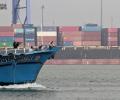
India's exports reached a six-month high, growing by 18 per cent to USD 45.2 billion in May, driven by electronic goods, petroleum products, engineering items, and pharmaceuticals. However, the trade deficit widened to USD 28.21 billion due to a 10 per cent rise in imports, particularly petroleum products and gold, amidst surging crude oil prices.

Global brokerage Citi has reduced its Nifty 50 index target to 26,000 from 27,000, citing persistent geopolitical tensions, risks to corporate earnings growth, and concerns about India's role in the global artificial intelligence (AI) ecosystem.

India's leading passenger vehicle manufacturers are significantly increasing investments and factory capacities, alongside planning major product launches for FY27, driven by strong confidence in sustained domestic demand growth despite global geopolitical tensions and supply chain risks.
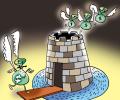
Foreign Portfolio Investors (FPIs) withdrew nearly Rs 33,000 crore from Indian equities in May, bringing the total outflow for 2026 to Rs 2.25 lakh crore, driven by weak earnings growth, rupee depreciation, and more attractive opportunities in other global markets.
Indian stock market benchmarks Sensex and Nifty closed higher on Tuesday, buoyed by a drop in crude oil prices, a rally in global markets, and strong buying in IT stocks.

From the Sensex pack, HCL Tech, Infosys, Tech Mahindra, Reliance Industries, Bajaj Finserv, ICICI Bank, Tata Motors and Eternal were the lead gainers. Power Grid, Adani Ports, IndusInd Bank, Nestle, HDFC Bank and Hindustan Unilever were among the laggards.

Indian equity benchmark indices Sensex and Nifty declined in early trade, driven by persistent concerns over the unresolved US-Iran situation and continued outflows from foreign institutional investors.

Foreign Portfolio Investors (FPIs) have withdrawn over Rs 62,853 crore from Indian equities in the first fortnight of June, bringing the total outflows for 2026 to Rs 2.87 lakh crore, surpassing the entire 2025 figure, driven by geopolitical tensions, global economic growth concerns, and a weakening rupee.

Indian benchmark stock indices Sensex and Nifty rebounded nearly 1 per cent, snapping a three-day decline, driven by rallies in Reliance Industries and Sun Pharma, alongside positive global market trends and easing geopolitical tensions.

India's leading listed real estate developers are increasingly focusing on pan-India expansion, diversifying beyond their traditional home markets into high-demand residential areas like MMR, NCR, Bengaluru, Hyderabad, Pune, and Chennai to tap broader housing demand and reduce reliance on single-city market cycles.

'Can you believe there are over 26,500 deaths linked to heatwave-driven ozone in 2024?'

'The flip side of this is that he won't hesitate to call out India if he thinks its policies are hurting US economic interests or border US foreign policy goals.'

Foreign Portfolio Investors (FPIs) have withdrawn nearly Rs 43,000 crore from Indian equities in the first week of June, contributing to a total outflow of Rs 2.67 lakh crore in 2026, driven by a global shift towards technology and AI-linked opportunities and persistent rupee depreciation.

Net mutual fund inflows into active equity schemes in India plummeted by 40 per cent month-on-month in May, reaching a one-year low of 22,908 crore, primarily due to weaker lump-sum investments and increased redemptions amidst significant market volatility and global uncertainties.

Crude oil prices are projected to fall significantly this year, driven by hopes of a peace deal between the US and Iran, which could lead to the reopening of the Strait of Hormuz, and a notable drop in Chinese demand for seaborne crude imports.
